
Heavy Duty
Practicing Christianity with Intention

From time to time, I’m presented with this question: What does it mean to be an Episcopalian? When I’m asked this question, even though I know in my heart and my soul what it means to me, I always pause. Why? Well, because I know that whatever answer I have in my heart or my soul is not going to be satisfactory to the person asking me the question. Follow-up questions are also common. Are Anglicans and Episcopalians the same thing? Are Episcopalians Protestants? Are they Catholics? Do you believe in transubstantiation? Why do you ordain people of all genders? Why are you LGBTQ+ affirming? As we can see by these types of follow-up questions, there isn’t exactly a good or an easy way to answer the original question. So, what does it mean to be an Episcopalian?

Comedian and actor Robin Williams, who was an Episcopalian, used to offer a playful definition. And while I find his definition humorous, I don’t find it terribly helpful to those who are seeking or practicing Episcopal theology. “The Episcopal Church is Catholic light!” he would say. “All of the religion, none of the guilt.” And on the surface, it might seem like we are “Catholic light” in some ways. Our catechism, for instance, is only a couple dozen pages, while the Catechism of the Catholic Church is over 900. Episcopal clergy can be married, while Roman Catholic priests and bishops most frequently are celibate. We also permit divorce when it’s necessary. We encourage science-based discourse around sexual health and reproductive care. We include people of all genders and sexual orientations into the full sacramental life of the Church. We have a (somewhat) open communion table policy. And Church leadership usually does not take an official stance about matters that Roman Catholicism deems to be “mortal sins.” At the same time, Episcopal theology isn’t “anything goes.” Saying we are “Catholic light” runs the risk of watering down our faith to the point where people can feel like they can simply do whatever they want whenever they want to. And that’s a drastic oversimplification.

Instead, I like to think of Episcopal theology as Catholic Heavy. How so? Well, because it isn’t easy to be an Episcopalian. But no one said following Jesus should be easy. Firstly, I sometimes use the terms Episcopal and Anglican interchangeably. But please keep in mind, even that can become problematic at times because not every church that identifies as Anglican belongs to the Anglican Communion. In fact, even some churches within the Communion do not share the views of the Episcopal Church. And to complicate matters further, in the United States, if a church identifies as Anglican, that means it is not Episcopal (and therefore, not part of the Anglican Communion). This is true even if that church (for instance, the Anglican Church in North America or the Reformed Episcopal Church) descends from Anglican Christianity in some way. Secondly, as Anglican Christians, we belong to the ancient Catholic expression of the Christian Church. We have a shared line of apostolic succession, a shared liturgy, and a shared lineage of sacramental devotion. Although some Roman Catholics dispute this, Anglicanism has always maintained episcopal ordinations of deacons, priests, and bishops since before the English Reformation. If Roman and Eastern clergy are “validly ordained,” then so are Anglican clergy. When we say we are “Catholic”, we do not mean we are in communion with the Church of Rome. We mean we are part of the Catholic Church (Catholic comes from the Greek word katholikos, which means, universal). As much as some Roman Catholics would like us to believe otherwise, the Roman Catholic Church is not the Catholic Church. It is a denomination within the Catholic Church. Just the same way we are.
You may be asking, “Fr. Tim, you just said you think of the Episcopal Church as Catholic Heavy, but isn’t the Episcopal Church considered a mainline Protestant church?” The answer is yes. So what do we mean by that? The word Protestant when used by Episcopalians doesn’t mean the same thing as it does when it’s used by Christians from traditions like Lutheranism. Lutheranism is a direct product of the Protestant Reformation, which took place on the European continent at around the same time as the English Reformation. And while Protestant reformers influenced Anglicanism’s reformation, the motives, disagreements, and results of the reformations were different. When we say we are Protestant in the Episcopal Church, we mean we are Christians who are not in communion with the Church of Rome. Unlike true Protestant denominations, Anglican Christians were not protesting anything. In many ways, the motives for the English Reformation were far more political than they were theological. At the same time, because Protestant reformers influenced our reformers, our theology conveniently serves as something of a “middle way” between Roman Catholicism and Protestantism. We are influenced by reformations, yet we honor and uphold the ancient Catholic traditions of the Christian Church. We acknowledge the validity (for lack of a more useful word) of Roman Catholic clergy and sacraments, and we see Christians across denominations as belonging to the one, holy, Catholic, and apostolic Church described in the Creeds.
When I say we are Catholic Heavy, what I mean is that there is a whole lot of personal responsibility and discernment necessary for Episcopalians to navigate our faith lives. While some denominations, including the Roman Catholic Church, outline specific guidelines and Church teachings for various occasions and circumstances, the Episcopal Church expects our faithful to discern many such stances for ourselves. For example, Roman Catholicism has very specific guidelines for what constitutes a fast on days like Good Friday and Ash Wednesday. Essentially, these rules include refraining from between meal snacking on those days. Meals ought to include three total meals with two smaller meals that, when combined, are no larger than the day’s main meal. Roman Catholics also are expected to abstain from meat. And while Episcopalians are expected to fast on those days, we don’t get guidelines about exactly what that means. Some follow the practice of our Roman Catholic cousins. Some do not eat any food at all on those days. Some choose a different practice as their fast all together. Instead of following specific instructions, we are encouraged to prayerfully discern how best to observe the practice of self-denial.
The good news about this is that there is room in the Episcopal Church for everyone! We can be assured that there are Episcopal parishes that closely align with our own values and spiritual needs. There also is a broad range of worship styles. Because the Book of Common Prayer gives us instructions about what to say and do but leaves much of the how to say it do it up to the community’s discretion, our experiences can be very different from one parish to another. In the city of San Francisco, California, worshippers can attend Grace Cathedral one Sunday and St. Gregory of Nyssa the next and walk away having experienced two vastly different expressions of our very ancient and sacred liturgy! In fact, if you’ve never been to St. Gregory’s, check it out when you’re in the Bay Area! It is licensed by the Diocese of California as an experimental parish, meaning they have special permission to incorporate worship elements that are not frequently seen in the Episcopal Church.
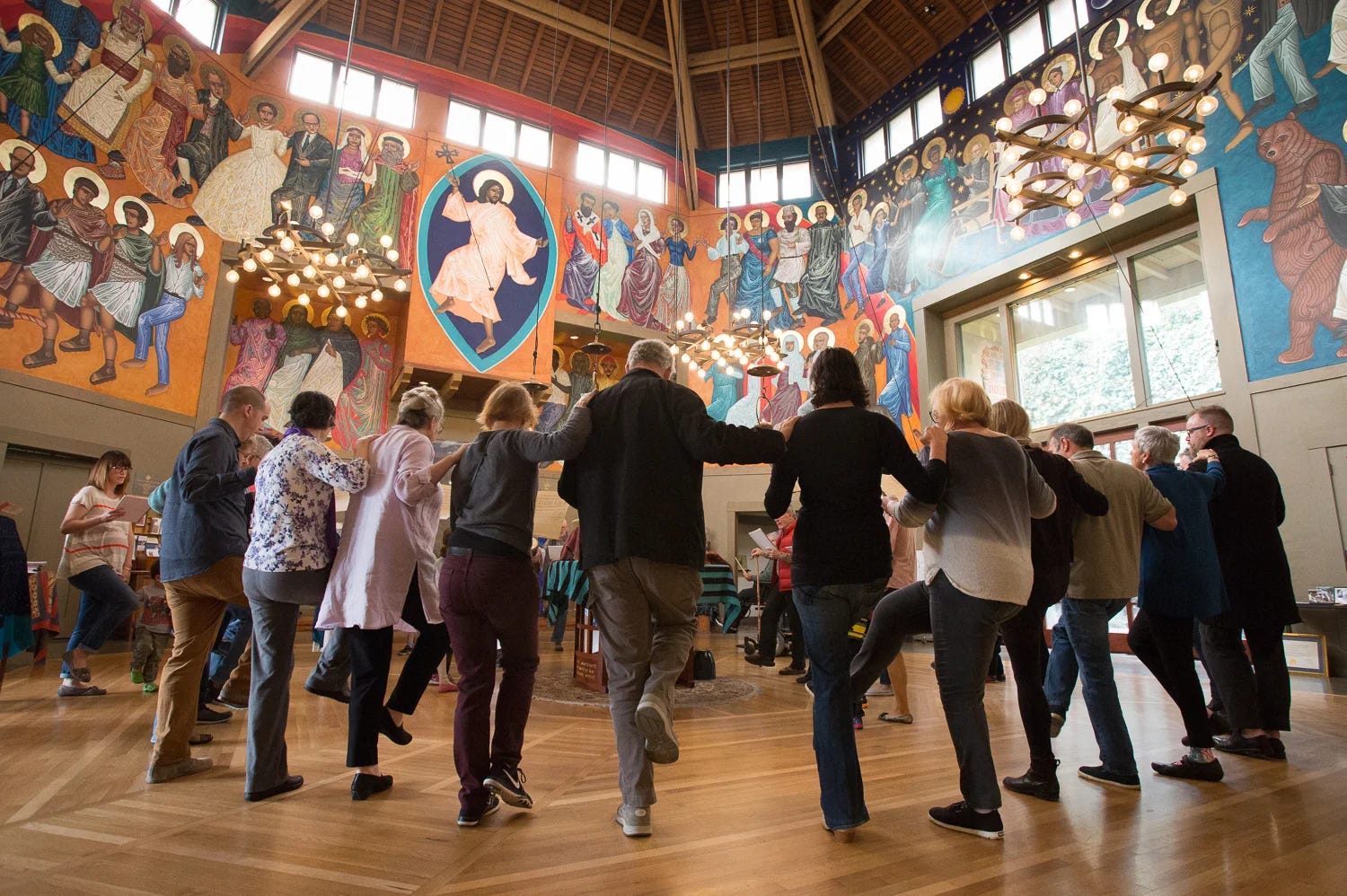
What is the value in this kind of variety? To me, it’s that neither expression is better or worse, or right or wrong. If you want to experience worship in a different, but very intentional way, then I encourage you to make a pilgrimage to St. Gregory’s sometime. If it’s at all possible, go twice. You might need time to process your experience before trying it again. It can be surprising! And wonderful. It also means that we have a tremendous amount of freedom in how we live our lives in faith. Do we like formal worship with flowing vestments and well-rehearsed choral music? Do we prefer an outdoor chapel with guitar accompaniment? How about something somewhere in the middle? No matter our answer, then we can rest assured that our worship lives are enhanced, and that God is praised.

We get similar assurance when we determine our stances about social issues. Again, it isn’t a matter of “anything goes.” We do have parameters we need to adhere to. But provided we are utilizing the teachings of Jesus, the information available to us (including science and medical knowledge), and prayer and discernment, then we get to decide for ourselves how best to shape our values. How do we do this? By adhering to the Two Great Commandments: Love God and love neighbor. All our decisions and opinions ought to be developed with these two commandments in mind, and we ought to examine our stances from time to time and to modify them if and when we have access to new information. For example, I strongly encourage everyone to get vaccines for illnesses and diseases like the flu, COVID-19, measles, and more. While personal choice is important, medical professionals tell us that such medications are safe, effective, and important. And even if I happen to be healthy enough that acquiring an illness would likely be highly survivable, my love of neighbor tells me that I have a personal responsibility to keep myself safe so that I don’t run the risk of carelessly passing on a sickness to someone far more vulnerable.
Similarly, we are now far more knowledgeable about human sexuality than people were when passages from scripture were written. We have far superior knowledge of human reproductive processes and functions than we had even 50 years ago. And we have made significant strides in areas surrounding mental and psychological wellbeing over the past few decades. This means that adhering to outdated stances on issues like same-sex marriage, human contraception, and even personal relationships between friends and family members, can mean ignoring the Two Great Commandments. How so? Easy. Dictating how others live their lives because of arbitrary expectations undermines their human capacity to discern for themselves. And ignoring advances in medical science denies that God plays an active role in making revelation to us about how creation operates. Christian theology teaches us that God continues to make revelation to us all the time. We simply have to pay attention. And as Anglican Christians, who utilize Richard Hooker’s famous three-legged stool model of scripture, tradition, and reason, we are expected to use reason. Or, in this case, the new information we have. Yes, even if it goes against things we’ve thought we’ve known all our lives.
Again, no one said it was easy to be a follower of Jesus. But I happen to believe Anglicanism is the best way to do this. It offers the faithful tremendous freedom! In his letter to the Galatians, St. Paul writes, “For freedom Christ has set us free” (Galatians 5:1). We are not bound to follow old habits simply because that’s what was always done. As we have access to new information, we are free (and, in fact, expected!) to change course. In fact, that is the very definition of repentance as it was taught by Jesus. Metanoia, the word Jesus says in Greek that we translate as repent, literally means to change our minds, our hearts, or our course. Staying stuck is of no benefit to ourselves or to others. When Johannes Guttenberg invented the printing press, parents were frightened that this new technology of reading material would “rot kids’ brains!” But now? Now we have learned that reading was perhaps one of the most important educational advancements in the last 500 years. If we had not embraced the printing press, then you would not be reading this article. In fact, you may not have even become literate at all! Other changes and advancements can have similar effects on our lives.
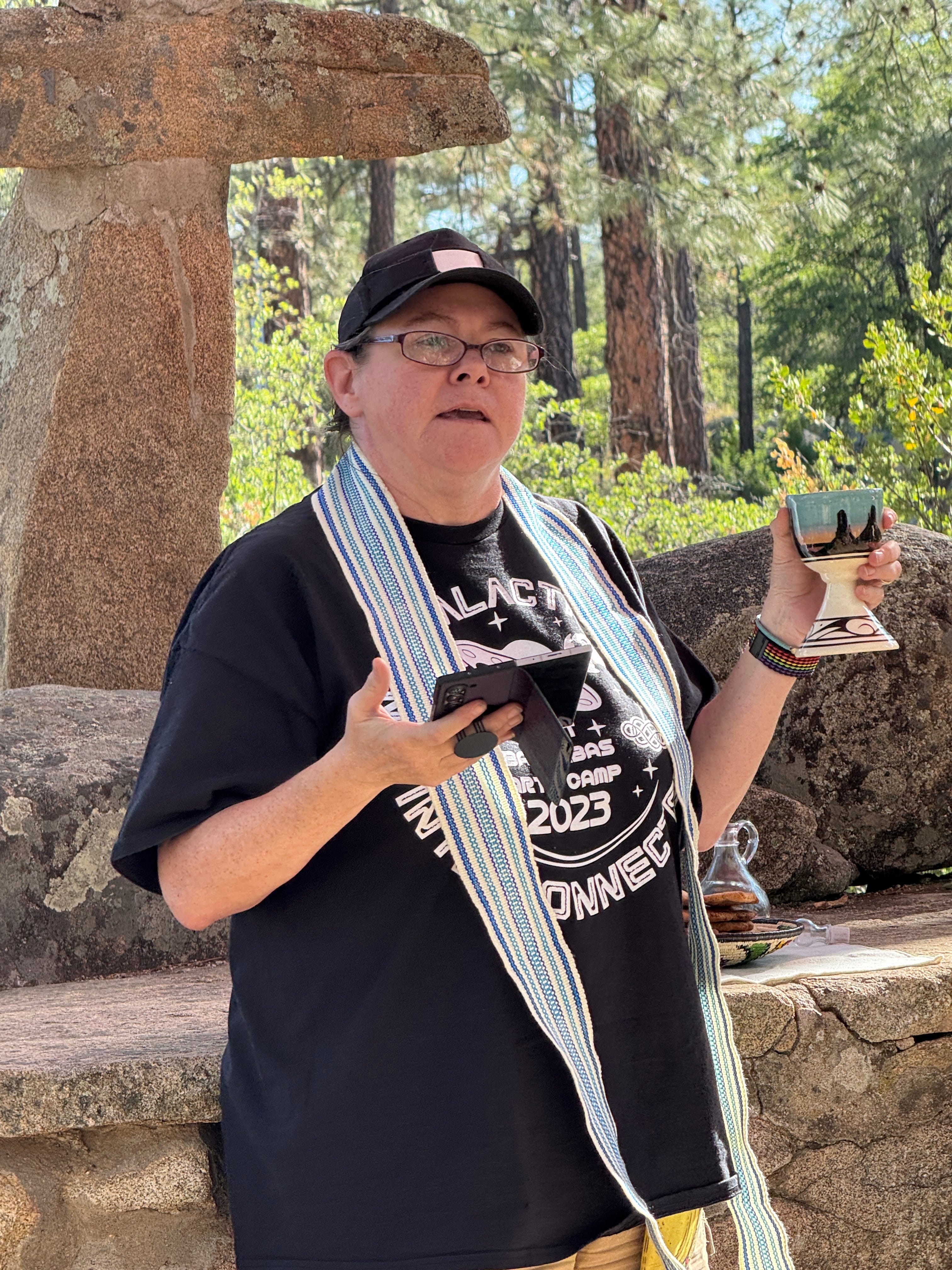
Essentially, the Anglican way of being Christian gives us the freedom to focus on things that are more important overall. Do we really need to worry about whether Jesus blessed wine in a cup or it if were a chalice? Do we really need to worry about whether he said his blood is shed for many or for all? Do we really need to worry about the alcohol content of the wine used during communion, or whether the bread has gluten in it or not? For Anglican Christians, the answer is no. That doesn’t mean Anglicans don’t worry about those things. It simply means we don’t have to worry about using so much energy worrying about them, and we can worry about love of God and love of neighbor instead. In fact, I think there’s a good argument to be made that the words cup and all in the Eucharistic prayer, and ignoring factors like alcohol content or the presence of gluten in communion elements demonstrates greater love of neighbor. Because it errs on the side of inclusion. Before I was ordained, I didn’t own a single chalice. I had a whole lot of cups. And all includes many, but many doesn’t necessarily include all. Anglican Christianity permits us to err on the side of radical welcome and inclusion. If, and only if, we’re willing to go there. In Matthew’s gospel, Jesus instructs us not to worry about trivial things. He tells us God knows our needs and God will provide. And, giving us the lyrics to one of our best-known hymns, he says, “Indeed your heavenly Father knows that you need all these things. But seek first the kingdom of God and his righteousness, and all these things will be given to you as well” (Matt. 6:32-33).
Clear as mud now :).
In all seriousness, "radical inclusion" should be on t-shirts.