
Broken For Love's Sake
Deviating From "Rules" When It's Pastorally Appropriate


An audio version of this pastoral reflection is available by clicking below
There’s an old joke that makes its way around the Church from time to time:
Q: What’s the difference between a liturgist and a terrorist?
A: It’s sometimes possible to negotiate with a terrorist.
All humor aside, people in the Church take their liturgy seriously. And with good reason! Our liturgy is the visible, tangible expression of our relationship with God and with one another. Our liturgy ought to have meaning and intention, and it ought to help us to have real encounters with God. In the Episcopal Church, we have entire books that explain the rubrics in detail. We all know about the Book of Common Prayer. But we also have the Book of Occasional Services, Lesser Feasts and Fasts, the Enriching Our Worship series, and more! We also have commentaries on all those books, most of which are written from an authoritative standpoint. While the rubrics give us some leeway when it comes to performing the liturgy, deviations from the rubrics must come with a bishop’s permission. That is true for hard and fast rules, but what about those other components of the liturgy that aren’t specifically named in the rubrics? Is it possible to deviate from the rubrics if something isn’t expressly prohibited? The answer is a solid and firm maybe.
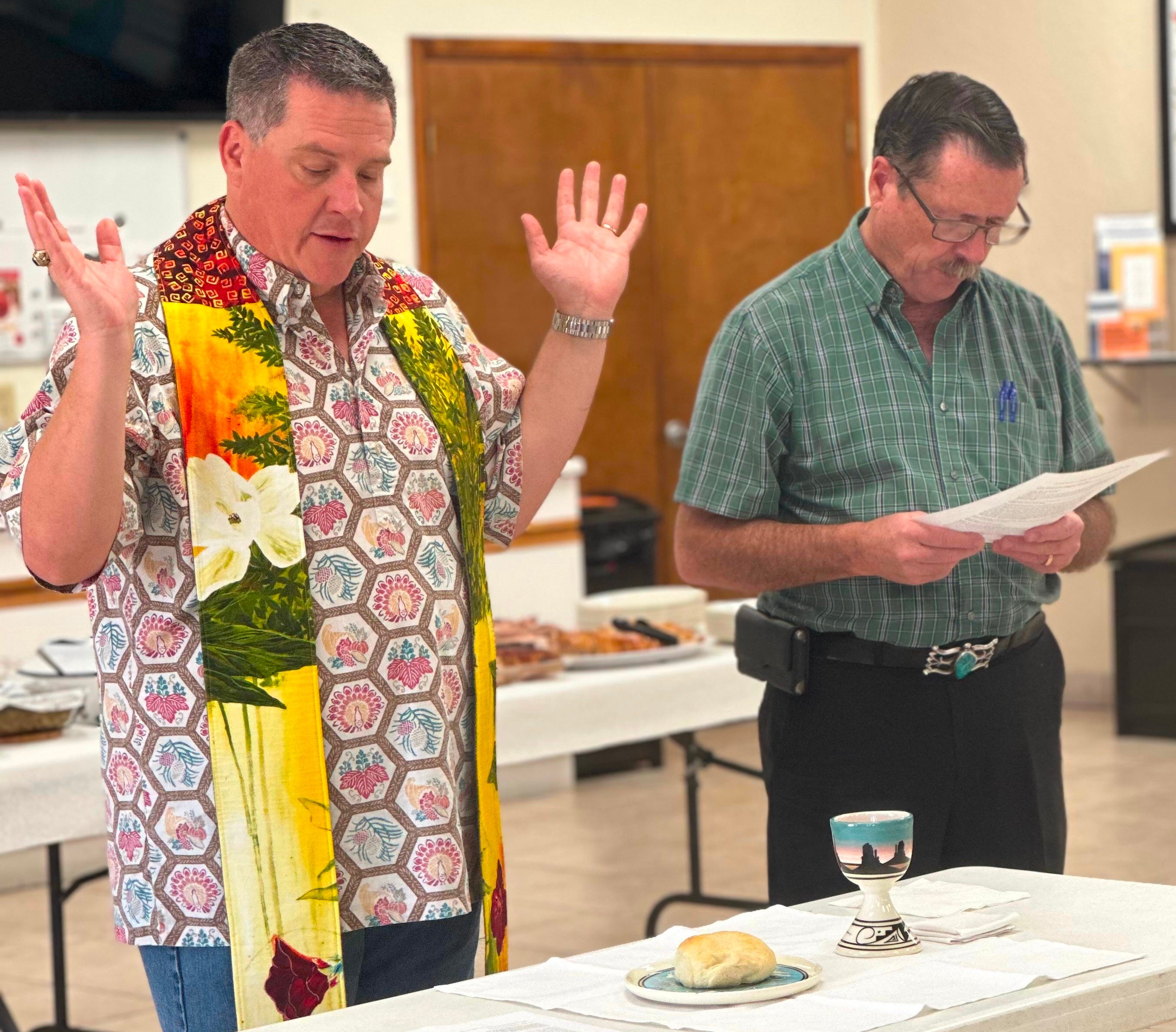
In my first couple years in seminary, I was a staunch follower of the rubrics. I was even the go-to guy when someone had a question about liturgical rubrics. Even my professors came to me with rubrical questions. But the first time someone made that joke about me as a liturgist, I realized it was time for me to have a look in the mirror. If you’ve seen the movie Harry Potter and the Sorcerer’s Stone, then you likely remember the smug face Hermione Granger makes as she’s correcting the pronunciation of classmate Ron Weasley’s spell casting. “It’s levi-o-sa, not levio-saaaaa,” she says in the movie, with a side of attitude. I realized I was a Hermione Granger, and my smugness was coming across as distasteful. My preferences, after all, did not speak for everyone in the Church. And who is to say that my interpretation of the rubrics is the only correct one? I loosened up a bit, partly because my chaplaincy training forced me to. In a church or at seminary, everything liturgical can be packaged nicely and neatly in a box. In a hospital or a prison, that isn’t exactly true. Those places are inherently chaotic. Hospital beds have cramped spaces, tubes, lines, cords, bedpans, and more, making for an inconvenient worship space. And prisons require security measures, restrictions, and other regulations that make following some rubrics impractical. At the same time, God is very much present in those places. And even when we do so imperfectly, we continue to worship God. Yes, even (and perhaps especially!) in those places.

Imagine the looks of surprise on the faces of my classmates and professors when I suggested we move evening prayer out to the seminary courtyard one day. In Berkeley, California, air conditioning isn’t commonplace. And it was a particularly hot day for worship in our non-air-conditioned chapel. As head sacristan, I made an executive decision to hold evening prayer outdoors, where we would not roast alive. Even the dean of the seminary asked, “Is it ok if we do this?” And my response was, “Why not? God is everywhere, so I’m pretty sure he’s outside!” People shrugged and went with it. But this wasn’t the Tim people were used to. They were used to the kind of guy who would have, just last spring, encouraged everyone to suck it up and deal with it. My chaplaincy training was immensely formational for me. When I learned to deviate from liturgical norms, I feel like I grew tremendously as a minister. Hermione Granger I was no more.
There’s an article going around Episcopal Church circles recently that highlights a list of things its author says to never do. I have seen this article shared by numerous Episcopalians, particularly clergy. Although the article contains many important and valid theological points, I feel it portrays an oversimplified understanding of liturgy in a pastoral context. Why? Well, because it leaves out the human element. Liturgy isn’t always nice and neat. In fact, it can be rather messy. A liturgy professor of mine, the Rev. Dr. Lizette Larson-Miller frequently said, “There’s no such thing as a perfect liturgy.” There are so many things that can go “wrong” during a liturgy. Should we really waste our time worrying about things we can’t control? I say no.

At the same time, it’s important for me to stress that I’m not a fan of sloppiness. It becomes challenging to be ok with things not being perfect, while at the same time explaining that the liturgy is important. As is true in many situations, black-and-white thinking can get in our way. Yes, good liturgy is important. And, at the same time, yes, it’s ok when things don’t go according to plan. While those two realities sound like they ought to be at odds with one another, they really aren’t. And if we’re honest with ourselves as liturgists, then we must acknowledge that there are simply times when things don’t go the way we’d like them to. Think of the time your church bulletin caught fire from your candle during the Easter Vigil. Or how about the time the thurible flew off its chain? What about the time the lector went to the wrong lectern? Or the time the chalice full of wine spilled on the altar? All of those things have happened. And all of those things will happen again. A good liturgist knows to continue on as if there’s been no problem at all. If we keep going, and act like whatever happened was supposed to happen, then most people will likely never know anything went wrong!
So what are the concerns this article’s author had? Well, for starters, it was very black-and-white. He laid out reasons why we shouldn’t make physical contact with worshippers when they are at the communion rail. He informed us why it was in poor taste to look into parishioner’s eyes while offering them the host or the cup. He told us how off-putting it can be to say someone’s name when presenting them with the Eucharist. While these are all perfectly reasonable “norms”, there are always times when it is appropriate to deviate. I am a firm believer that the pastoral decision always takes precedence over the liturgical rubric. Liturgists are, first and foremost, supposed to be pastoral. Good liturgy is also good pastoral care. So while it is indeed true that we never want to interfere with a person’s encounter with Jesus Christ, there are also times when a human interaction with a pastoral person can facilitate that encounter. How so? Well, each of us is different! Each of us comes to the table from a different starting point. Sometimes breaking the rubric is, quite frankly, the right thing to do.
At San Quentin Prison in California, the death row inmates are not allowed any person-to-person contact with anyone. And yet, Christians on death row are permitted by law to attend worship services. For these services, they are kept in individual plexiglass-enclosed holding cells, while the priest is in another. They can see and hear each other, but they cannot touch. How, then, does the inmate receive Holy Communion? The priest slides the consecrated wafer under the door. That’s right. The Body of Christ makes contact with the floor of a prison cell. And the inmate consumes it. This is a huge violation of the rubrics! The Body of Christ must always be treated with care and respect. And yet, at the same time, there is no other way to commune an inmate unless this is done. While I admit I could be wrong, I believe Jesus fully supports the decision to administer the sacrament this way. Jesus knew what he was doing when he gave us the sacrament in the form of bread and wine. Despite our best efforts to prevent it, he is going to have an encounter with his people. It’s that simple.
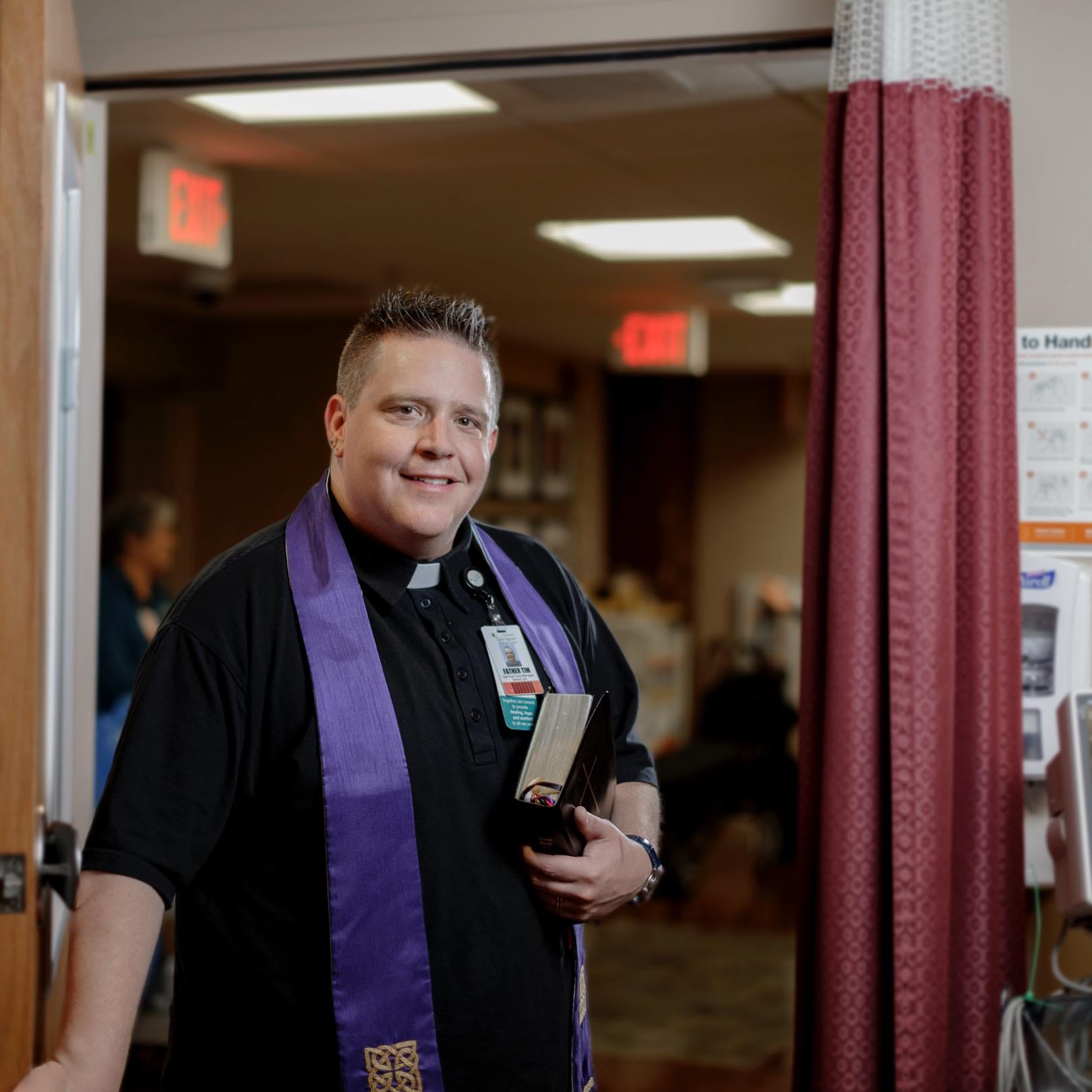
In short, yes, we must take our liturgy seriously. We must do our part to ensure we are reverent and intentional when we celebrate the mysteries of the Church. At the same time, we are imperfect humans trying to worship a perfect God. God knows our imperfections. He knows our emotions. He knows our limitations. He knows that when something is funny, we’re going to laugh. And he knows that when something is sad, we are prone to cry. He knows that some of his people do not need, nor want, a priest to look them in the eye, to touch their hand lovingly, or to call them by name when they receive communion. But he also knows some of his people deeply crave these encounters. I will always try my best to be the pastoral liturgist my parishioners need me to be. That doesn’t mean I’ll always get it right (because I certainly don’t!). But it means I’m going to try my hardest. And if we’re honest with ourselves, isn’t that all we can really do? I think it is. We take our liturgy seriously. But there is always room for our humanity to dwell in that liminal space. We are humans, made in the image of a loving God. And that’s exactly the way God loves us.