
Blessed are the Flexible
Getting out of our Own Way for the Sake of Evangelism

I’m trying something new this week. The text of this week’s reflection is included as always. I’m adding a video to accompany the reflection as well. Please let me know if you appreciate having the video, or if the audio alone is preferred. Be sure to share and subscribe!
What does it mean to be a Christian? These days, there isn’t a simple answer to that question. In fact, it might be safe to say there has never been an easy answer to that question. Christianity has been used as a tool to unite and to control. It has been used to exalt and to condemn. It has been used as a balm and it has been used as a weapon. It has been used to heal and it has been used to hurt. Plus, with over 40,000 denominations in Christianity (many of which claim to be the only “true” version), how do we Christians even know we’re practicing the same religion? There are indeed some core teachings that most if not all Christians agree on, but we don’t all agree on how to practice them. For instance, we all know that Jesus said, “Go therefore and make disciples of all nations, baptizing them in the name of the Father and of the Son and of the Holy Spirit” (Matthew 28:19). But Christian denominations have vastly different understandings of exactly what that means and exactly how to do it. So here we are, in a rapidly changing world, wondering what we need to do to keep the Church relevant. What are we supposed to do now?
I don’t have the answers. But I do have some ideas. George Bernard Shaw famously said, “If you have an apple and I have an apple, and we exchange these apples then you and I will still each have one apple. But if you have an idea and I have an idea and we exchange these ideas, then each of us will have two ideas.” So I’m happy to share my ideas with those who might be willing to listen.
As a life-long liturgical Christian, I find it confusing that some groups claim the title “Christian” as if they’re the only people qualified to do so. I’m equally concerned that these groups have hijacked the term “evangelical” to mean something different than what it had always meant. Coming from Greek, evangelical means “sharing the good news.” These days, however, it is usually used as an umbrella term for a sect of American Protestant Christians who subscribe to what they call “Bible-based teachings.”

What are these so-called Bible-based teachings? In my view as a progressive Christian priest, the term “Bible-based” is simply code speak that justifies keeping populations on the margins. Frequently, these denominations (which sometimes claim to be “non-denominational”) preach a version of the gospel that justifies marginalization of women, the LGBTQ community, and other vulnerable groups. They often insist on the perpetuation of harmful practices like “purity culture”, and they openly teach about the “prosperity gospel”. This type of theology falsely claims that if we are faithful, then we will be financially wealthy. It works out great when things are going well, but when we’re down on our luck, we can easily become convinced that our misfortunes are the result of our own spiritual failures. Understandably, many people are troubled by this bad theology. Unaware of other flavors of Christianity, these people feel better off with no church at all than they would be while attending an Evangelical church.
Speaking for my own denomination, I advocate for Episcopalians to develop a willingness to get out of our own way. If we are going to do what Jesus said in the above passage from Matthew’s gospel, then we have to make sure people know who we are. We also have to make our worship accommodating to those who might find it unfamiliar. Think of how odd it might be for a first timer to wander into a liturgical worship service. For those of us raised in liturgical traditions, there’s no issue. But the people who need us most, the recovering Evangelicals and unchurched people who want to follow the teachings of Jesus, are likely to feel at least a little out of place if we don’t make it as seamless as possible. Non-liturgical Christians have been taught that liturgical Christians are “idolators”. They’ve been taught we are “of the devil.” They’ve been taught that we are “leading people astray.” Under the very best of circumstances, people who enter our doors for the first time are likely to feel uncomfortable, or even ashamed because of all the toxic theology they’ve been taught. It’s our responsibility to put them at ease. Yes, even if it means being giving up our own comforts.
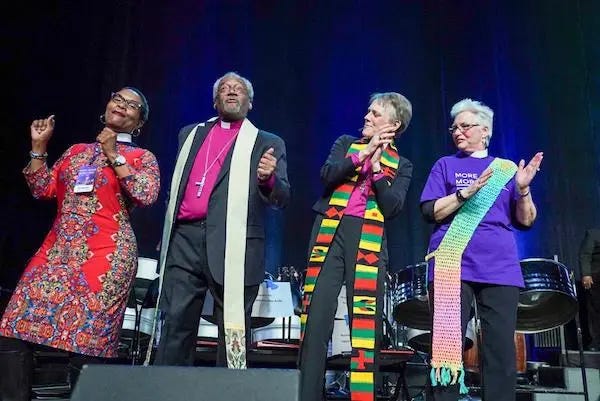
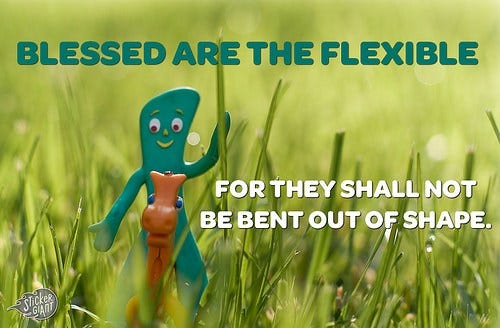
In a humorous take on the Beatitudes, Robert Ludlum said, “Blessed are the flexible, for they will not be bent out of shape.” I mean, it sounds great. But what is liturgy if it isn’t sacred? Our liturgy is ancient and timeless. Why should we cast it aside simply because some people don’t “get it”? The answer is easy. We shouldn’t. We can (and should!) honor the integrity of the liturgy while creating an inviting environment at the same time. If you’ve ever been to a wedding reception, then you’re familiar with the Electric Slide. You know how some people know the Electric Slide, and some people don’t? But the people who know it are willing to go at a slower pace so others can learn and join them? Well, think of the liturgy as a dance. While those of us with liturgical backgrounds already know the dance (even when we’re attending different liturgical churches!), we are called to teach the dance to others so they no longer feel like outsiders. Grace is unearned and undeserved, but it is readily available to all! God doesn’t require us to sing (or dance!) for our porridge!
In the Episcopal Church, we have a Book of Common Prayer. But, as my friend, the Rev. Cn. Chuck Milhoan says, we don’t use it commonly. The Prayer Book gives us lots of options. As a studied liturgist who is also a Board Certified hospital chaplain, I find myself uniquely qualified to strongly encourage churches to err on the side of options that welcome the stranger. I have presided over the Eucharist in massive cathedrals, and I’ve presided near dying people’s death beds. Were those cathedral services any more “valid” than those in critical care rooms? If anything, I’d say the hospital services were even more spiritual. While we never want to compromise the integrity of the liturgy, there are some simple changes we can make that will enhance its accessibility. In pastoral ministry, we must always put ourselves in a position to meet people where they are. The onus is on us.
If we can’t get beyond the tired old, “We’ve always done it this way,” then those of us who are under the age of 45 will simply have to turn the lights off when we leave. Why? Because the Episcopal Church will die. The good news (evangelism!) is that it doesn’t have to. It does, however, require effort and flexibility. And while I’m obviously speaking to the laity, I’m also speaking to my clergy colleagues and to music directors. We have so many resources to choose from, let’s not be afraid to get outside the pages of the Book of Common Prayer and the 1982 Hymnal. There. I said it.
Is the Prayer Book wrong? Of course not! The Prayer Book is beautiful! The Prayer Book is a wonderful collection of liturgies and rituals that are deeply rooted in scripture and tradition! At the same time, it isn’t always the most helpful teaching aid for that proverbial Electric Slide. We have two “rites” in our Prayer Book, and we also have Enriching Our Worship. Depending on our Bishops’ discretion, some dioceses even have access to other resources. Evangelical Lutheran Worship (ELW), for instance, contains wonderful verbiage. We Episcopalians are in full communion with our ELCA counterparts, don’t forget. Modern language, modern music, and modern prayers can go a long way toward making those new “dance steps” seem just a little bit easier to learn. Considering I was the known “liturgy geek” of my seminary class, people are sometimes surprised to hear me advocate for “contemporary resources.” I know much of the Prayer Book better than some of my professors! But familiarity with the “rules” brings with it an understanding about when and how to “deviate.” Coming from the Rev. Louis Weil, one of the writers of the 1979 Book of Common Prayer, everything we do in liturgy ought to be done with intention. Weil, a beloved liturgist, priest, and scholar, said, “In order to fulfill its purpose the liturgical rite must make a connection with the congregation.” He added, “Generally speaking, clergy may be expected to know what is intended in the rite, but what is it that the people see? What the people see is sometimes quite different from what is intended.”
If you’re a frequent reader, then you’ve already seen my reasoning for enhancing our digital footprint as a denomination. I also discourage the common practice of “fasting” from social media during Lent. While this can be a solid personal discipline, it has potentially dire consequences. Non-liturgical Christians do not observe Lent and certainly do not “fast” from social media during that time. Losing the progressive Christian voice for a period of nearly two full months means the internet can become saturated with what can only be described as bad theology. Take on a different spiritual discipline, I beg you. Don’t silence one of the few modes of ensuring our collective voice is heard by those who need it most. Don’t be afraid of technology. Use it. Create a Canva account and use it. Trust me. The Evangelical churches have a reach far greater than ours. Let’s flip that narrative on its head. These are people’s souls we’re talking about!

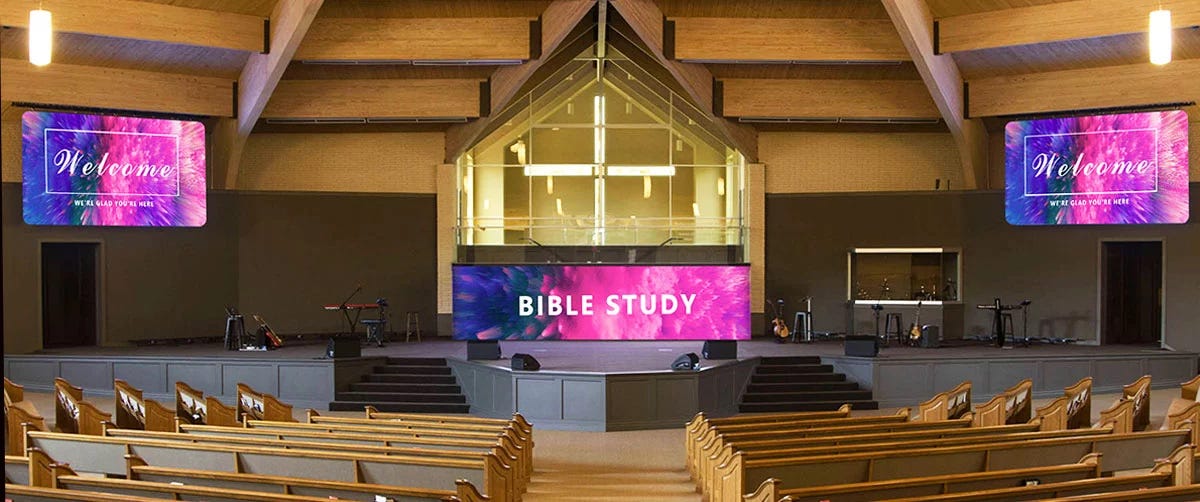
What else? Ditch the physical books whenever possible. Uh oh. I lost ya, didn’t I? Don’t go away! Wait! At least let me explain! Install projection screens to show the order of worship. Wait! No, really! Come back! Give me thirty more seconds. Here’s the deal. For a new user, the Book of Common Prayer doesn’t make much sense. How so? Well, tell me on what page begins the most important service of our entire week? You’re right! Page 355! Anyone who said 323 stopped reading a long time ago. Why does it start on 355? Practical purposes! A book opened frequently will hold its binding better if it’s opened toward the middle, rather than in the front! But if you’re looking for a new church home, how likely do you think you are to make any sense at all about turning to page 355? We have to make it as easy as possible to learn that Electric Slide. Screens are easy to see, and inexpensive to operate. There’s no expectation to fumble around with multiple books or booklets, and everyone is looking at the same thing at the same time. Evangelical churches are using screens. There’s no reason Episcopalians shouldn’t use them as well.
And what about music? Evangelical churches have hoppin’ music! Sure, the theology of the hymns might seem shallow to some of us. But they use catchy tunes. While there is certainly nothing wrong with traditional Anglican hymns, and most of them are quite beautiful and timeless, we Episcopalians must recognize that those hymns don’t speak to everyone the same way. Don’t toss them all aside completely. Just don’t be afraid to bring out newer resources. Our official hymnal is from 1982. Do you know what else is from 1982? Me! I was born in 1982. While I promise there’s nothing inherently wrong with things from 1982, we have so many new resources to use! We have supplemental hymnals like Wonder, Love, and Praise, and Lift Every Voice and Sing II. We also have Enriching our Music. And don’t count out resources used by other traditions. Hymnals like Breaking Bread can be surprisingly useful!
Is it comfortable to implement these changes? No. It is easy to get buy-in from our existing parishioners who may be life-long Episcopalians? Not even close. But you know something? We’ve been through change before. In fact, breakaway groups like the Anglican Church in North America, attribute the publication of the 1979 Book of Common Prayer as part of their reason for leaving the Episcopal Church. Which means we find ourselves at the familiar, yet sad crossroads we’ve seen many times before. General George Patton is one of many who have said, “lead, follow, or get out of the way.” ACNA Anglican Christians chose the last part. Call me crazy, but I want to do the first. I want to lead, but I want to lead from within. I don’t want to lead as a superior, but as an equal. An equal who has invested in education and now wants to share his learnings with others. You are called to be a leader, too. If you’re not comfortable stepping into that leadership role, then be a follower. And if you can’t do either, then get out of the way. Is it brash? Maybe. But it’s unfair for you to hold others back simply because you’re not ready to move forward.
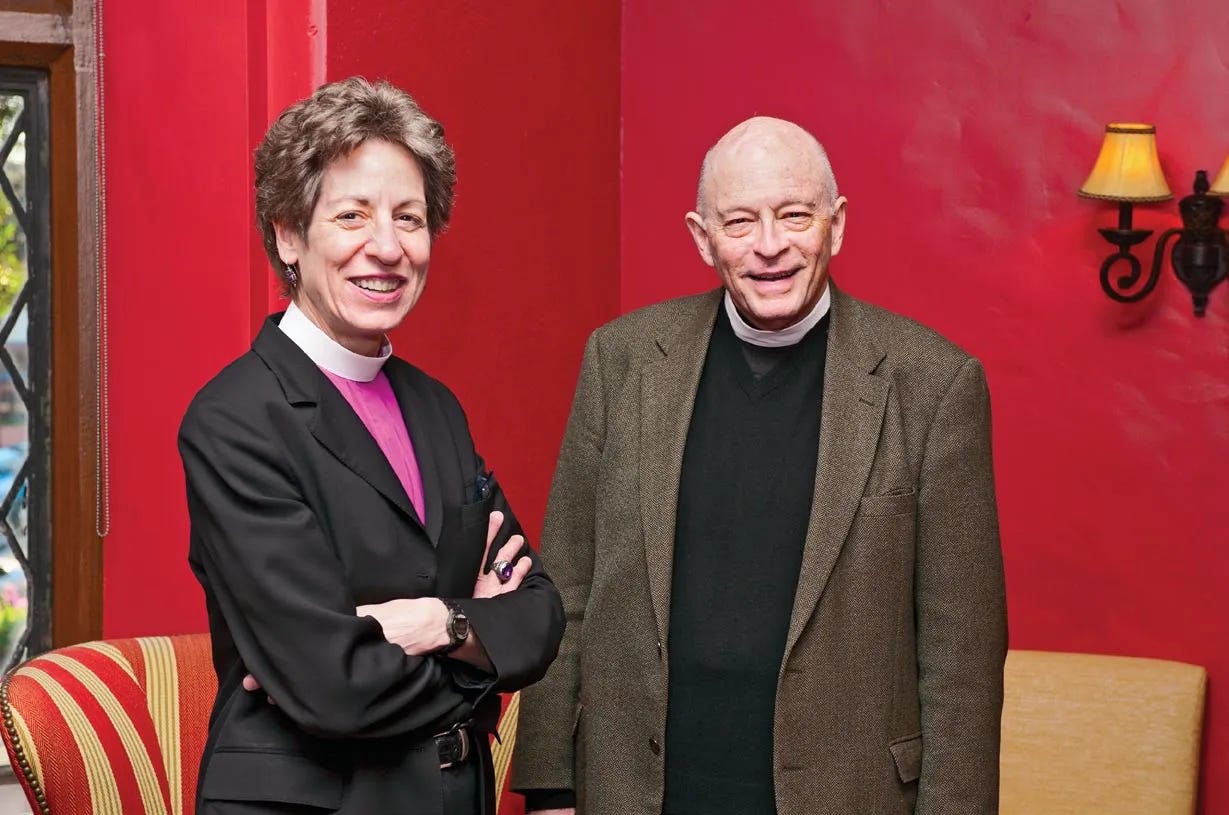
I leave you with a final quote from Fr. Weil, a beloved mentor I am honored to have studied under. “We need to be engaging people who are essentially already outside of the body. They are out of touch with knowledge about the Church, its prayers, traditions, and history. Sometimes missionary activities can take on nonreligious forms. There are also a lot of variations in the liturgy which can be welcoming to the seeker.” If we can get out of our own way, the Episcopal Church will flourish. If we can’t, then millions of people who need us will lose out on the privilege of discovering us.
As a special education teacher I really enjoyed you speaking to Universal Design for Learning (UDL). Essentially, they are inclusive practices better allowing all learners to access and benefit. Keep up the good work!
Thank you for this explanation.